


FDA Sildenafil Dosage Guidelines: Why 100mg Is the Maximum Recommended Dose of Viagra?
Sildenafil is a widely used medication for Treating Erectile Dysfunction (ED), a condition that can make it difficult to achieve or maintain an erection firm enough for sexual activity. It is the active ingredient in Viagra and is also available in various generic formulations.
Although FDA sildenafil dosage guidelines is available in different strengths, taking a higher dose does not automatically mean better results. The correct dose depends on several factors, including how well the medication works, individual tolerance, existing medical conditions, and other medicines a person may be taking.
According to the official US prescribing information for FDA sildenafil dosage guidelines, the recommended dose for most patients is 50 mg when needed. Depending on effectiveness and tolerability, a healthcare professional may adjust the dose to 25 mg or a maximum recommended dose of 100 mg. The maximum recommended dosing frequency is once per day.
Understanding these guidelines can help patients make informed decisions, recognize potential risks, and discuss their treatment options with a healthcare professional.
What Is the FDA sildenafil dosage guidelines?
The US Food and Drug Administration (FDA) regulates prescription medicines and evaluates their safety and effectiveness. The FDA-approved prescribing information for Viagra provides specific dosing guidance for adults being treated for erectile dysfunction.
For Viagra, the recommended dose for most patients is 50 mg, taken as needed before sexual activity. Depending on the patient’s response and tolerance, the dose may be reduced to 25 mg or increased to 100 mg.
The Maximum Recommended dose for Viagra when Treating Erectile Dysfunction is 100 mg, with no more than one dose Recommended per day.
This is an established dosing Recommendation in the official prescribing information, not necessarily a newly announced FDA restriction.
It is also important to understand that 100 mg is a maximum recommended dose, not a target that everyone should aim to reach. Many people may respond adequately to a lower dose, while others may need a different approach under medical supervision.
Understanding Sildenafil Dosages: 25 mg, 50 mg, and 100 mg
Sildenafil tablets are commonly available in 25 mg, 50 mg, and 100 mg strengths. Each strength contains a different amount of the active ingredient, but the appropriate option depends on the individual’s medical circumstances.
Sildenafil 25 mg
A 25 mg dose may be appropriate for certain patients who need a lower dose. A healthcare professional may consider this strength based on medication interactions, health conditions, age, or tolerability.
A lower dose may also be recommended when certain medicines increase sildenafil exposure in the body.
Sildenafil 50 mg
The 50 mg dose is the usual recommended starting dose for most adults using Viagra for Erectile Dysfunction.
It is generally taken as needed, approximately one hour before sexual activity. The official prescribing information states that it may be taken between 30 minutes and four hours beforehand.
The actual response varies between individuals, and patients should follow the instructions provided by their healthcare professional.
Sildenafil 100 mg
The 100 mg strength is the maximum recommended dose for Sildenafil Generic Viagra when treating erectile dysfunction under the standard US prescribing guidance.
A healthcare professional may consider this dose when a lower dose has not provided sufficient benefit and the patient tolerates the medication appropriately.
However, a higher dose can also increase exposure to the medication and the likelihood of adverse effects. It should not be taken simply because a person expects stronger or faster results.
Important: Patients should not increase their dose independently or take additional tablets when the initial dose does not appear to work.
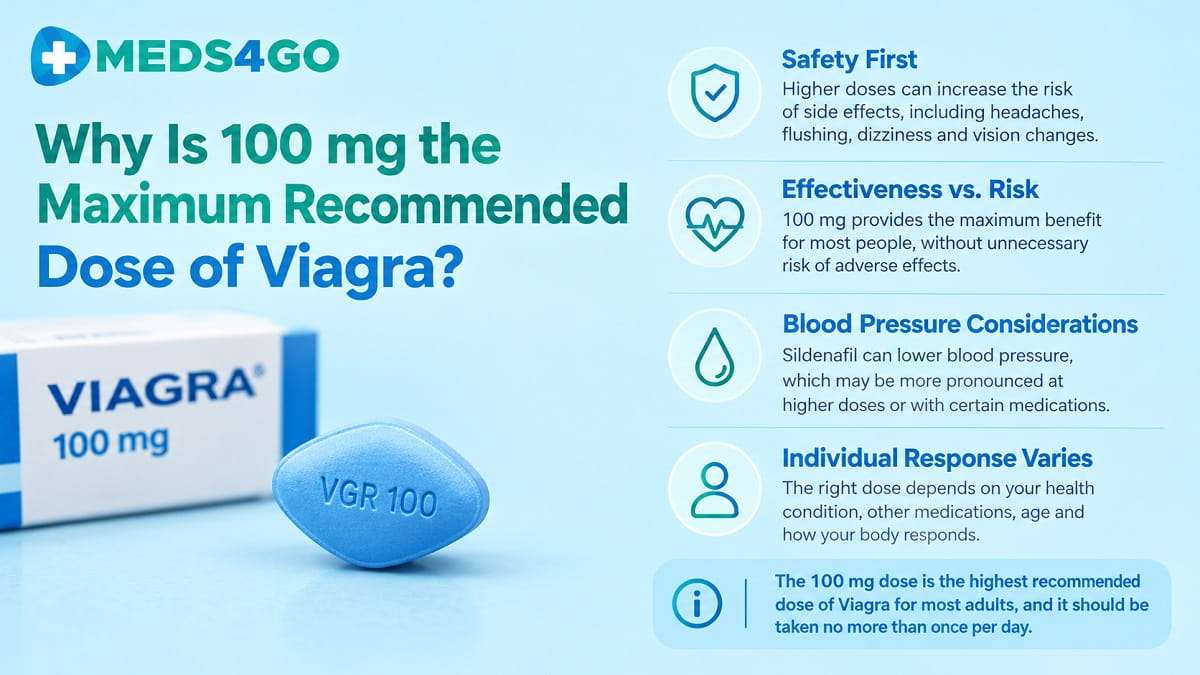
Why Is 100 mg the Maximum Recommended Dose of Viagra?
A maximum recommended dose is established to balance potential benefits against known safety risks. Increasing the amount of a medication does not guarantee a proportionate improvement in its effects.
Sildenafil works by inhibiting an enzyme called phosphodiesterase type 5 (PDE5). This helps support the blood-flow changes needed to achieve and maintain an erection in response to sexual stimulation.
The recommended dose takes into account the medication’s effectiveness, how the body processes it, and the possibility of side effects.
1. Higher doses may increase side effects
Common side effects of sildenafil include headaches, facial flushing, nasal congestion, indigestion, dizziness, and visual disturbances.
Some side effects may become more troublesome when the body is exposed to higher amounts of the medication.
2. Sildenafil can lower blood pressure
Sildenafil affects blood vessels and can lower blood pressure. This effect may become particularly concerning when it is combined with certain other medicines or taken by people with specific cardiovascular conditions.
3. Individual responses differ
Age, liver function, kidney function, other medications, and underlying health conditions can influence how sildenafil affects an individual.
For these reasons, the highest available strength is not necessarily the most suitable dose for every patient.
Can You Take Viagra More Than Once a Day?
The official prescribing information recommends taking Viagra no more than once per day.
Taking another dose within the same day is not recommended, even if the first dose seems less effective than expected. Additional doses can increase drug exposure and the risk of adverse effects.
Sildenafil does not automatically produce an erection after it is taken. Sexual stimulation is still needed for its intended effect, and individual responses can vary.
If a prescribed dose does not work as expected, a healthcare professional can assess possible reasons, including timing, other medicines, underlying health conditions, and whether a different treatment approach may be appropriate.
Do not combine Viagra with other sildenafil-containing products or other erectile dysfunction medicines unless specifically directed by a qualified healthcare professional.
What Happens If You Take More Than 100 mg of Sildenafil?
Taking more sildenafil than recommended can increase the risk of adverse effects. However, the effects of an excessive dose can vary according to the amount taken, other medications, and a person’s health.
Potential concerns include:
- More severe headaches or facial flushing.
- Dizziness or lightheadedness.
- A significant drop in blood pressure.
- Visual disturbances.
- Fainting or other serious cardiovascular symptoms in some circumstances.
- A prolonged or painful erection, which can require emergency treatment.
Taking more than the recommended dose does not guarantee better erectile function.
If you have taken more sildenafil than prescribed, contact a healthcare professional or poison information service promptly for advice, even if you do not immediately notice symptoms. Seek emergency medical assistance if you experience chest pain, fainting, sudden vision or hearing loss, or an erection lasting more than four hours.
Do not take another dose while seeking advice.
Important Sildenafil Drug Interactions
Sildenafil can interact with several medicines. Before using it, patients should tell their healthcare professional about all prescription medicines, non-prescription products, and supplements they take.
Nitrates
Sildenafil must not be used with nitrate medicines, which are commonly prescribed for chest pain and certain heart conditions. Examples include nitroglycerin and isosorbide preparations.
The combination can cause a dangerous drop in blood pressure.
If you experience chest pain after taking sildenafil, seek emergency medical assistance and tell the medical team when you last took the medication. Do not take nitrate medication unless emergency clinicians determine that it is safe.
Riociguat
Riociguat, a medicine used for certain forms of pulmonary hypertension, must not be combined with sildenafil because of the risk of excessive blood pressure reduction.
Alpha-blockers and blood pressure medicines
Some alpha-blockers and antihypertensive medicines can increase the risk of low blood pressure when used with sildenafil.
A healthcare professional may need to review the patient’s treatment and adjust the regimen.
Other erectile dysfunction medicines
Combining sildenafil with other PDE5 inhibitors, such as tadalafil or vardenafil, is not recommended unless a specialist has provided specific instructions.
Using multiple erectile dysfunction treatments together can increase the risk of adverse effects, and their combined safety may not be established.
Who Should Be Careful When Using Sildenafil?
Sildenafil may not be appropriate for everyone. A medical assessment is especially important for people who:
- Have significant heart or cardiovascular problems.
- Have low blood pressure or certain uncontrolled blood pressure conditions.
- Have serious kidney or liver impairment.
- Have a history of certain eye conditions, including non-arteritic anterior ischemic optic neuropathy (NAION).
- Have experienced a prolonged erection or have conditions that increase the risk of priapism.
- Take medicines that may interact with sildenafil.
This list is not exhaustive. The safety of treatment depends on the individual’s health and medication history.
People should also discuss whether sexual activity is medically appropriate for them, particularly if they have a cardiovascular condition that makes sexual activity inadvisable.
Common Side Effects of Sildenafil
Like other prescription medicines, sildenafil can cause side effects. Not everyone experiences them, and their severity varies.
Commonly reported effects include:
- Headache.
- Facial flushing.
- Indigestion.
- Nasal congestion.
- Dizziness.
- Changes in color vision or blurred vision.
Some symptoms require immediate medical attention.
Seek urgent medical care if you experience:
- An erection lasting longer than four hours.
- Sudden loss or a significant reduction in vision.
- Sudden hearing loss.
- Chest pain, fainting, or severe dizziness.
- Signs of a serious allergic reaction, such as difficulty breathing or swelling of the face or throat.
Prompt medical assessment is important because some complications may cause lasting harm if treatment is delayed.
How to Use Sildenafil More Safely?
Using sildenafil responsibly involves more than choosing a tablet strength. Patients should follow their prescription and understand the instructions that apply to their circumstances.
Here are several practical considerations:
Follow the prescribed dose. Do not increase the dose or take extra tablets without medical guidance.
Do not exceed the recommended frequency. For Viagra used to treat erectile dysfunction, the standard recommendation is no more than one dose per day.
Discuss other medications. Certain medicines can change sildenafil’s effects or make the combination unsafe.
Avoid unverified products. Products obtained from unreliable sources may contain incorrect amounts of active ingredients or undisclosed substances.
Seek advice if treatment is ineffective. Persistent erectile difficulties can be associated with cardiovascular disease, diabetes, medication effects, psychological factors, and other health concerns. A healthcare professional can help identify the cause and discuss suitable options.
Frequently Asked Questions About Sildenafil Dosage
1. What is the maximum recommended dose of sildenafil for erectile dysfunction?
For Viagra, the maximum recommended dose under the standard US prescribing guidance is 100 mg, taken as needed, with a maximum recommended frequency of once per day. The appropriate dose may be lower depending on a patient’s medical circumstances.
2. Is 100 mg of Viagra safe for everyone?
No. Although 100 mg is the maximum recommended dose in the standard prescribing guidance, it is not appropriate for every person. Health conditions, medication interactions, and individual tolerance can affect which dose is suitable.
3. Can I take two 50 mg Viagra tablets together?
Two 50 mg tablets contain a total of 100 mg of sildenafil. However, patients should not combine tablets or change their prescribed dose without consulting a healthcare professional. The appropriate dose depends on individual circumstances.
4. Can I take Viagra twice in one day?
The official prescribing information recommends no more than one dose per day. Taking another dose within the same day can increase the risk of side effects and is not recommended.
5. Does 100 mg of sildenafil work better than 50 mg?
Not necessarily. Some patients may experience an adequate response with 50 mg, while others may require a dose adjustment. A higher dose may also increase side effects, so dose changes should be guided by a healthcare professional.
6. How long before sexual activity should sildenafil be taken?
For Viagra, the usual recommendation is approximately one hour before sexual activity. The official prescribing information allows a window of 30 minutes to four hours beforehand. Individual instructions may vary.
7. What should I do if sildenafil does not work?
Do not take an extra dose to compensate. Discuss the issue with a healthcare professional, who can review how and when the medicine was taken, possible interactions, underlying conditions, and alternative treatment options.
8. Can sildenafil be taken with nitrates?
No. Sildenafil must not be combined with nitrate medicines because the combination can cause a dangerous drop in blood pressure. Patients should disclose all medications to their healthcare professional before treatment.
9. What are the most serious side effects of sildenafil?
Serious warning signs include an erection lasting more than four hours, sudden vision loss, sudden hearing loss, chest pain, fainting, and severe allergic reactions. These symptoms require urgent medical assessment.
10. Is sildenafil the same as Viagra?
Sildenafil is the active ingredient in Viagra. Generic sildenafil products contain the same active ingredient, but patients should verify that their product is appropriately authorized and obtained from a reliable source.
11. Does the 100 mg maximum apply to every medicine containing sildenafil?
No. The 100 mg maximum discussed in this article refers to the standard US prescribing guidance for Viagra used to treat erectile dysfunction. Sildenafil is also prescribed for other conditions, including pulmonary arterial hypertension, which has different dosing instructions. Patients should follow the prescribing information for their specific medicine and condition.
12. Where can I find reliable information about sildenafil safety?
The FDA-approved prescribing information, the National Library of Medicine’s DailyMed database, and MedlinePlus are useful sources of reliable medicine information. Patients should also consult a qualified healthcare professional for advice tailored to their medical history.
Conclusion
The maximum recommended dose of Viagra for erectile dysfunction under standard US prescribing guidance is 100 mg, with no more than one dose recommended per day. However, this does not mean everyone needs the highest available strength or that a higher dose will produce better results.
The appropriate dose depends on individual response, tolerability, health conditions, and possible drug interactions. Understanding these factors can help patients avoid unnecessary risks and have more informed discussions with their healthcare professionals.
For anyone considering sildenafil treatment, the most important step is to follow the prescribed instructions, avoid exceeding the recommended dose, and seek medical advice when treatment is ineffective or causes concerning symptoms.
Medical Disclaimer
This article is for educational purposes only and is not a substitute for professional medical advice, diagnosis, or treatment. Dosing information refers to US prescribing guidance for Viagra used to treat erectile dysfunction and may differ for other sildenafil products, medical conditions, or jurisdictions. Always follow the prescribing information for your specific medicine and consult a qualified healthcare professional before starting or changing treatment.